Is It Safe to Travel to Greece Right Now? Here's What Most Travelers Don't Realize
Is it safe to travel to Greece right now? Learn about wildfire season, current travel advice, safety tips and what to know before visiting Greece this summer.
Photo Credit: Yuliya Rudavska
You booked Greece for blue water, grilled halloumi and sunsets—not to become an amateur wildfire analyst refreshing five weather apps before breakfast. So, is it safe to travel to Greece right now?
For most travelers, the answer is yes—but summer trips require more awareness than usual. Greece currently holds the lowest U.S. travel-advisory rating, and millions of people visit safely every year. However, extreme heat and seasonal wildfires can affect individual destinations with very little warning, especially during July and August. That means a wildfire in one part of Greece does not automatically make the entire country unsafe—but it does mean you should check the situation in the exact island, city or region you plan to visit.
Read on to find out whether it is safe to travel to Greece right now, how the Greece fires may affect your trip and what precautions to take before packing your sandals.
Is It Safe to Travel to Greece Right Now?
Generally, Greece remains safe for most travelers exercising normal precautions.
According to the U.S. Department of State, Greece currently has a Level 1: Exercise Normal Precautions travel advisory—the lowest advisory level available. The department explains that Level 1 does not mean a destination is completely risk-free, but it indicates that visitors should follow ordinary international travel precautions.
That said, the answer to “Is it safe to travel to Greece right now?” depends partly on where you are going.
Greece is a large and geographically varied country made up of mainland cities, mountain regions and numerous islands. Conditions in Athens can be completely different from those in Crete, Rhodes, Corfu or the Peloponnese.
A wildfire near one destination does not mean every Greek island is burning—despite what a dramatic social-media headline might make you think.
The sensible approach is to check official advice for your specific destination shortly before departure and again while you are traveling.
RELATED:5 Best Silent Travel Destinations in the U.S. for Quiet Retreats & Wellness Escapes
Are the Wildfires Making Greece Unsafe?
Wildfires are a genuine summer hazard in Greece, but they are usually regional rather than nationwide.
According to Greece Moments, Greece fires occur every year, with the greatest danger during hot, dry periods in midsummer. The publication notes that the landscape becomes especially dry between mid-July and mid-August, while heatwaves above 40°C can make fires easier to ignite and harder to contain.
The UK government also warns that Greece faces a high wildfire risk during the warmer season and stresses that fires can be dangerous, unpredictable and capable of changing direction quickly.
This does not mean you should automatically cancel a trip to Greece. It means you should determine:
Whether Greece fires are active near your destination.
Whether evacuation orders have been issued.
Whether roads, airports or ferry routes are disrupted.
Whether your hotel or travel provider has contacted you.
Whether local authorities advise against entering the area.
A Greece fire hundreds of miles away may have no effect on your holiday. A Greece fire near your resort, however, is not something to “wait and see” from a pool lounger.
When Is Wildfire Season in Greece?
Greece’s official fire season generally runs through the warmer part of the year, with the greatest risk during the hottest and driest summer weeks. Greece Moments describes the country’s principal wildfire season as running from May through October, with conditions typically becoming most dangerous during July and August.
The UK government similarly advises travelers that the summer wildfire risk can extend from spring into autumn.
Wildfire danger is influenced by more than temperature alone. Strong winds, dry vegetation, drought and low humidity can cause a small fire to spread quickly.
So even when your weather app shows nothing but cheerful little sun icons, fire conditions may still be serious.
RELATED: Is the London Pass Worth It? Don't Buy It Until You Read This
Is Greece Too Hot to Visit in Summer?

Photo Credit: Marina Kamilaki
Possibly—depending on your tolerance for heat and your willingness to reorganize your day around shade.
According to Intrepid Travel, summer temperatures on mainland Greece can reach approximately 90–98°F, while Athens may reach around 100°F with very little cloud cover.
August sits at the heart of Greece’s busiest summer period. Intrepid notes that mainland temperatures often exceed 35°C during the month, while popular islands become crowded and prices rise with demand.
Extreme heat can create risks even when no wildfire is nearby. Travelers should take heat exhaustion and dehydration seriously, particularly older adults, young children and people with certain medical conditions.
Plan strenuous sightseeing early in the morning, take breaks during the hottest hours and do not underestimate how quickly “We’ll just walk to the Acropolis” can turn into a deeply personal argument with the sun.
RELATED: Is Tokyo Expensive in August? Here's What the Data Actually Says
Is Athens Safe Right Now?
Athens is generally safe for visitors, although summer heat and petty theft deserve attention.
The city’s biggest everyday concern for tourists is usually opportunistic theft in crowded places rather than violent crime. Watch your belongings on public transportation, around major attractions and in busy squares.
Avoid carrying your phone loosely in an open pocket, and keep bags zipped and positioned where you can see them. The person pressed unusually close behind you on the metro may not simply be enthusiastic about public transportation.
During heatwaves or wildfires near the wider Attica region, monitor local alerts because smoke, road closures or transport disruption can affect Athens even when the city center itself is not directly threatened.
Are the Greek Islands Safe to Visit?
Most Greek islands remain safe for travelers, but conditions should be checked island by island.
Greece’s islands are spread across a huge area, so it makes little sense to treat them as one destination from a safety perspective. A wildfire affecting one island may have no connection to conditions on another.
Before traveling, look up:
The latest local fire-risk level.
Any evacuation notices.
Ferry and airport updates.
Information from your accommodation.
Advice from your airline or tour operator.
This is especially important if you are staying in a rural villa, forested area or accommodation reached by only one narrow road.
When asking “Is it safe to travel to Greece right now?”, replace “Greece” with your actual destination. “Is it safe to travel to Crete right now?” is a much more useful question than treating an entire country as one weather system.
RELATED: Are Amsterdam Saunas Mixed Gender? Here’s a First-Timer's Guide to Dutch Sauna Etiquette
How Will I Know If a Wildfire Is Near Me?
Greece uses the 112 emergency-alert system to warn people about serious and immediate dangers.
According to Greece’s Ministry for Climate Crisis and Civil Protection, emergency messages can be sent directly to compatible smartphones through cell-broadcast technology. These alerts may include evacuation instructions and other protective actions.
When you receive a 112 alert:
Stay calm.
Read the entire message.
Follow the evacuation route or instructions given.
Do not head toward the fire to investigate.
Do not ignore the message because your hotel still appears peaceful.
The UK government also advises travelers to follow official Greek emergency updates and call 112 if they are in immediate danger.
Keep your phone charged, switch on emergency alerts and carry a portable charger during day trips.
Should I Cancel My Trip to Greece Because of the Fires?
Not automatically. Canceling an entire Greek holiday because of a fire in a distant region may be unnecessary. Start by checking whether the incident affects your actual destination or transport route.
Contact your:
Hotel or accommodation host.
Airline.
Ferry company.
Package-holiday provider.
Travel insurer.
Do not rely entirely on videos circulating online, especially when they do not include a location or date. A dramatic clip may be real but filmed hundreds of miles from your hotel—or several summers ago.
You should reconsider or alter your trip when authorities issue evacuation instructions, transport becomes disrupted, your accommodation closes or official advice warns against traveling to the affected area.
RELATED: Don’t Visit London Without Buying These Outfit Staples
Does Travel Insurance Cover Greek Wildfires?
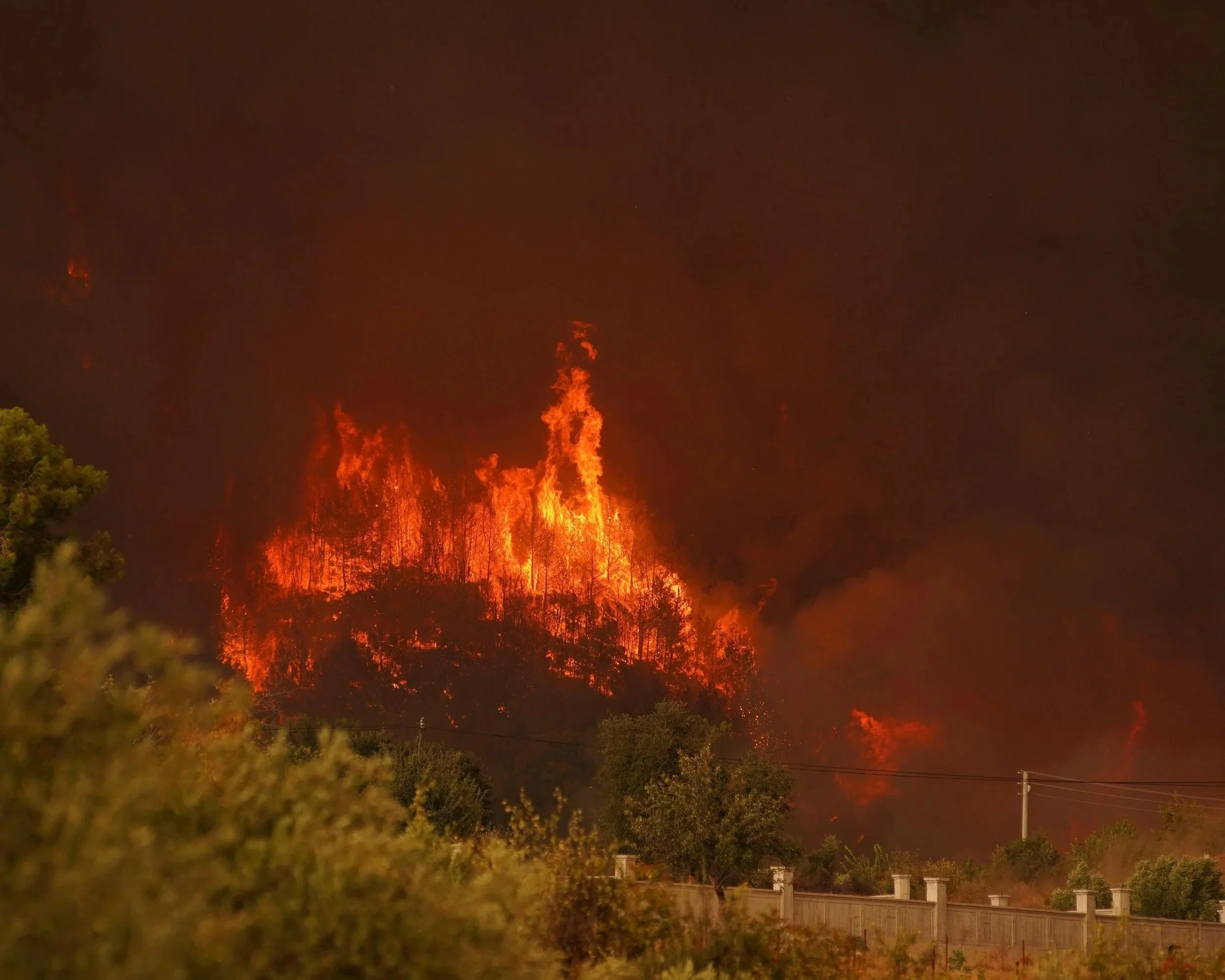
Photo Credit:Özgür Sürmeli
Sometimes, but not every policy covers the same circumstances.
Coverage may depend on:
When you bought the policy.
When the wildfire began.
Whether official authorities advised against travel.
Whether your flight or accommodation was canceled.
Whether your trip was booked as a package.
Whether your policy includes natural-disaster disruption.
Being worried is not always enough to trigger cancellation coverage. Insurers often require an identifiable event—such as an evacuation order, cancellation or official travel warning.
Read the policy carefully and contact your insurer before canceling anything yourself.
Is Greece Safe for Solo Female Travelers?
Greece is generally considered a manageable destination for solo female travelers, particularly in established tourist areas.
Normal precautions still apply:
Arrange reliable transportation after dark.
Avoid isolated beaches or rural paths alone at night.
Keep someone informed of your plans.
Watch drinks in crowded nightlife areas.
Secure valuables on ferries and public transportation.
Take heat and wildfire alerts seriously.
The seasonal risks discussed in this guide apply whether you are traveling alone, with a partner or with a group. Fire does not care how organized the group chat is.
Why Do So Many People Still Visit Greece?
Because most trips happen safely—and Greece remains one of the world’s most popular destinations. Bank of Greece data reported by Reuters recorded approximately 37.98 million inbound travelers in 2025.
The scale of Greek tourism does not erase the risks of heat or wildfire. It does show that seasonal hazards coexist with a large, functioning tourism industry. Millions of travelers continue to visit Athens, the islands and mainland Greece without their trips turning into disaster documentaries.
How to Stay Safe in Greece During Wildfire Season
A little preparation goes a long way:
Check official fire and travel updates before departure.
Keep emergency alerts enabled on your phone.
Save the European emergency number, 112.
Carry water and a portable charger.
Ask your hotel about its evacuation procedure.
Avoid hiking in high-risk areas during extreme heat.
Never discard cigarettes or light outdoor fires.
Follow local instructions immediately.
Keep medication, identification and essentials easy to grab.
Buy suitable travel insurance.
According to UK travel guidance, visitors should avoid actions that could spark a fire, including leaving glass litter, failing to extinguish cigarettes or lighting barbecues in unsafe conditions. Causing a wildfire—even unintentionally—can be a criminal offense in Greece.
So, Is It Safe to Travel to Greece Right Now?
Yes, Greece is generally safe to visit—but summer travelers need to remain alert to heat and localized wildfire conditions.
The U.S. Department of State continues to place Greece at Level 1: Exercise Normal Precautions, and there is no blanket warning telling travelers to avoid the entire country.
However, “Is it safe to travel to Greece right now?” should never be answered without considering your exact destination. Conditions can change quickly, and a region affected by fire may require evacuation even while the rest of Greece continues operating normally.
Check official updates, listen to local authorities and do not treat emergency alerts as optional vacation suggestions.
With sensible preparation and destination-specific research, most travelers can still enjoy Greece safely—sunsets, souvlaki and all.
RELATED: The Best Digital Nomad Hotspots to Work Remotely This Year
Frequently Asked Questions
Is Greece under a travel warning?
The U.S. Department of State currently lists Greece at Level 1: Exercise Normal Precautions, its lowest advisory level. Travelers should still check for destination-specific disruptions and emergency notices before departure.
Are Greece’s airports still open during wildfires?
Airports often remain open when fires occur elsewhere, but smoke, road closures or nearby emergencies can cause delays. Check directly with your airline and airport rather than assuming all Greek transportation is affected.
Which parts of Greece are safest from wildfires?
No area can be guaranteed wildfire-free. Risk varies with heat, wind, vegetation and local conditions. Urban and less-forested areas may face lower direct fire exposure, but smoke and transport disruption can still travel beyond the fire zone.
What number should I call during an emergency in Greece?
Call 112, the European emergency number. Greece also uses 112 to send location-based warnings and evacuation instructions to mobile phones.
Should I avoid Greece in July and August?
Not necessarily, but these are among the hottest, busiest and highest-risk months for wildfires. Travelers who dislike extreme heat or want fewer crowds may prefer June, September or another shoulder-season period.
Is it safe to travel to Greece with children right now?
Usually, yes, provided your destination is not under an evacuation or official warning. Families should be especially careful about dehydration, heat exposure and keeping essential supplies accessible.
Can I get a refund if wildfires affect my Greece trip?
Possibly. Refund rights depend on whether your provider cancels the trip, whether you booked a package and what your insurance policy covers. Contact the travel company and insurer before canceling independently.